April 26, 2026
If the ideas inside your organization flow from top to bottom, you have a problem.
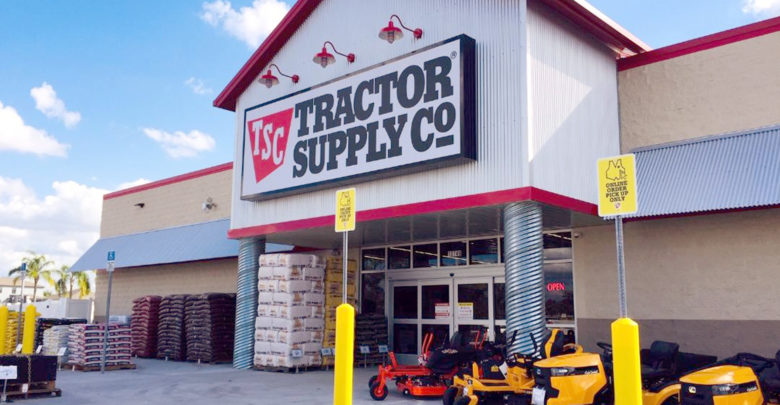
If my decades of business leadership taught me anything, it’s that those closest to the work know the most about it. At Tractor Supply Company, suggestions for improvement almost always started in the stores, then ran up through the distribution centers and finally, landed with our leadership team at the Store Support Center. For this reason, I recommend that all leaders consider how they might get closer to the work they support – in other words, get closer to the action.
In my professional career, I always did my best to stay engaged with the folks on the front lines. At Tractor Supply, buyers and executives were regularly inside our retail stores talking to salespeople and customers. Even a simple conversation can impact the future buying and operating decisions of an organization. And the learning opportunities do not have to start and end inside your own shop. Visit factories, distribution centers, any entity that touches the work you do. I bet you’ll be pleasantly surprised by the amount of conversation these visits will inspire. What if we packaged it this way? What if we shipped it that way? Plus, there is a certain morale boost that comes from taking a team field trip with no agenda but to be curious.
Paying attention to your professional competitors is another method of staying close to the action. No matter the industry, you will forever have competitors who are just as interested as you are in innovating and improving. Make sure you have an awareness of what’s happening in your sector – not just inside your organization. Your company may be the best for now; but as long as your competitors keep innovating, it’s crucial that you do the same.
Attending trade shows and industry events is another way of keeping your finger on the pulse of your industry. Just by talking to your peers, you will send yourself down a learning path with the potential to produce amazing results. The most valuable experiences come with some amount of effort, though; be sure to listen carefully and ask the right questions. In any case, you are likely to learn more at your worst trade show than you are behind a desk.
As you grow in your leadership role, think carefully about how you plan your weeks. Ask yourself: “how much of my desk time could be delegated?” If you can reasonably off-load a quarter of your administrative burden, imagine how much more time you could spend on the ground with those closest to the action.
You cannot effectively run a business if you are distant from the work. You cannot advance positive change and hold credibility with those most affected if you sit behind a desk all the time. If you want to unlock your organization’s fullest potential, get close to the action!
published Nashville Business Journal




I thought one of the best things Tractor Supply ever did was have store support personnel working in stores for a week at a time.
Joe, I agree with your premise. If ideas only flow top-down, you don’t just have a proximity problem, you have a decision problem.
Those closest to the work don’t just have ideas, they understand the trade-offs. That insight often gets diluted as it moves up the chain.
Getting “close to the action” isn’t only about visibility. It’s about integrating frontline reality into how decisions are made.
Presence matters. But structure matters more.
Leaders have to create repeatable ways to pull insight from the edge, weigh it against strategy, and make clear trade-offs.
That’s where credibility comes from.
Proximity without discipline creates noise. Proximity with structure improves decisions.
Getting leaders into stores and working alongside teams make a real difference.
From my experience, teams can still hesitate to speak openly if there’s uncertainty about how local leadership will respond. Even when feedback is requested, you can get an “everything is fine” response—not because there isn’t anything to improve, but because it feels safer.
It’s not just about being ignored—it can feel like speaking up risks being overridden or labeled as difficult, even when the intent is simply to improve the work.
Over time, that can create a quiet “yes man” effect where feedback exists but is filtered before it’s ever fully shared.
So I think the challenge isn’t just being close to the work, but making sure people feel safe being honest where they work.
Yet another great piece of advice and I couldn’t agree more. I think that this applies to all professions. In our industry, being out on the coal face talking to the engineers and technicians enables you to understand their roles and challenges and therefore be able to increase their efficiency and productivity which benefits both the customer and the company.
And you also get to see and talk to the customer.
Balancing and maximising your time effectively across the business is vitally important to allow time to be on the front line.